

:Gaza- Nawa Network- Filastiniyat
On March 8, much of the world marks International Women’s Day with speeches and public tributes. In Gaza, many women begin the day inside tents.
Radwa once lived in a small seaside apartment overlooking the Mediterranean. She worked online, while her husband managed a small business. Their life changed in October 2023 when an airstrike destroyed their building. She lost her job and her husband’s business collapsed.
Now she cooks over scrap wood and waits for water trucks to arrive.
"I curse this war every minute," she says. Smoke from the fire has darkened her face, and her hands are swollen from washing clothes by hand and carrying water in plastic containers. “I don’t look like myself anymore. I feel like I exist only to survive."
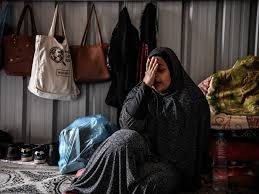 Across Gaza, many women mark this year’s International Women’s Day not with celebration, but with endurance.
Thousands now live in tents or in damaged buildings left hollow by months of bombardment. Displacement, food shortages and the daily struggle to secure basic needs have reshaped their routines and family dynamics.
"I didn’t lose a relative,” Radwa says. "But I lost who I was."
Before the war, her phone was filled with photos from family outings. Now she rarely speaks with friends. "I wear the same prayer clothes most of the day,” she says. "A hot shower feels impossible. Even the tent bathroom is barely a bathroom."
Mental health specialists say such experiences are widespread. Surveys indicate that more than 75 percent of women in Gaza now report symptoms of chronic anxiety and depression. Mental health services remain extremely limited, leaving most women to cope without professional support.
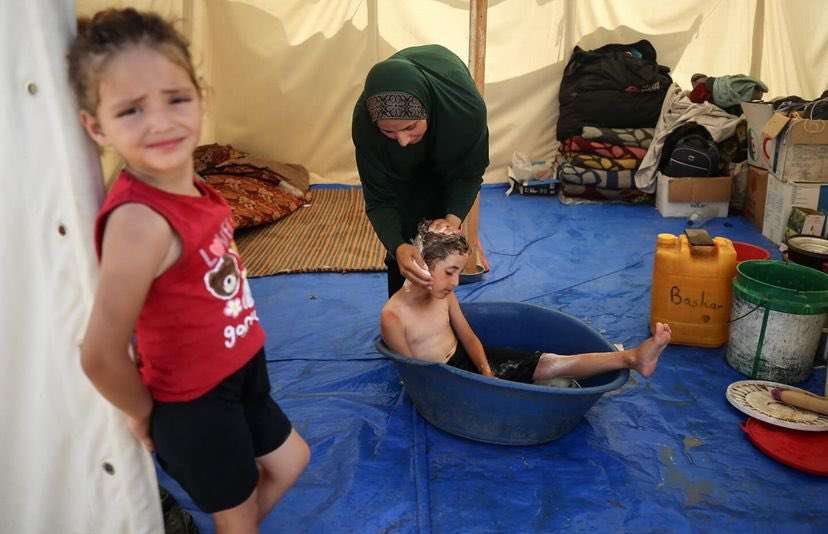
In the coastal displacement area of Al-Mawasi, Rana kneels beside a small fire outside her tent to prepare breakfast for her husband and five children. When tears fill her eyes, she blames the smoke.
Her husband once worked occasional labor jobs. Since losing his income, she says, tension inside the tent has grown.
"Our life was never luxurious, but it was stable,” says Rana, who asked that her real name not be published. "Since the war, he has changed."
She says arguments now happen almost daily. Sometimes they start over small issues — sand brought into the tent or the rising price of cigarettes. The arguments often turn violent.
"Everyone comments on every detail of my life. At night I cry quietly so no one hears."
"He insults the way I look," she says quietly. “He says I’ve become ugly and old."
She believes the pressure of unemployment and displacement has affected him, but she says she has no way to escape the situation.
"I know he feels the stress,"she adds. “No work, no money, and a family to feed. But I’m the one who receives the anger. And I have nowhere else to go. My parents’ home was destroyed."
For nearly two years, she has shared the tent with her husband, their children, her mother-in-law and two unmarried sisters-in-law.
"Privacy doesn’t exist,” she says. "Everyone comments on every detail of my life. At night I cry quietly so no one hears."
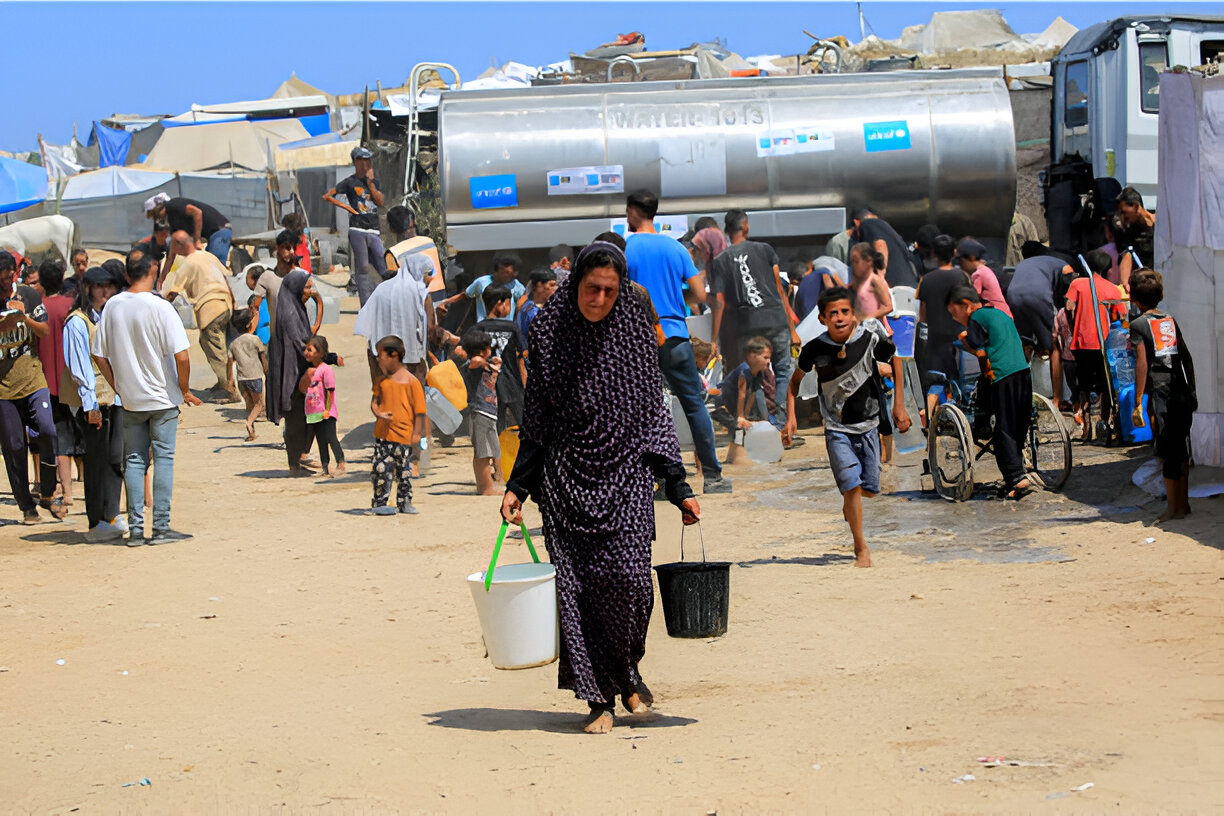
Daily survival tasks have also taken a physical toll. Gaza’s water system has largely collapsed, forcing women to carry heavy containers across long distances each day.
Rana says the constant lifting has left her with severe back pain and joint problems.
"Here, a woman does everything," she says. “She carries water, protects the tent and treats injuries with whatever she can find."
For widows, the pressure can be even greater.
"There’s no time to grieve," she says. “The children need milk. The fire needs wood. The tent must be watched.
Yasmine lost her husband during the war and now supports her children alone. Without stable income or permanent housing, she has taken on the roles of both parents.
"There’s no time to grieve,” she says. "The children need milk. The fire needs wood. The tent must be watched."
She also faces tension with her late husband’s family. They help cover some expenses but expect to make decisions about the children.
"My brothers-in-law decide many things,” she says. “I can’t argue because I depend on them."
"?Will I spend the rest of my life in this tent?” she asks. "Will my children grow up without school or stability
At night she often lies awake thinking about the future.
"?Will I spend the rest of my life in this tent?” she asks. "Will my children grow up without school or stability"
Her mother-in-law sometimes criticizes her silence, accusing her of withdrawing from family life.
"She doesn’t understand,” Yasmine says. “I’m still living the shock — losing my husband, losing our home, losing the future we planned."
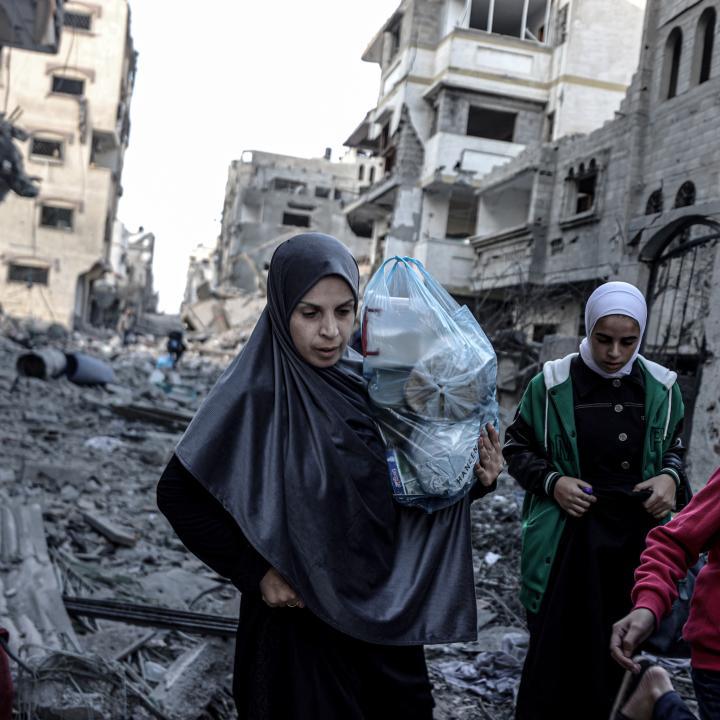 Psychologist Leila Ali says the war has created overlapping crises for women and girls.
"They live under constant threat and uncertainty," she explains. “The levels of fear, trauma and exhaustion are extremely high.”
Inside the camps, daily chores are entirely manual. Women wash clothes by hand, cook over open flames and walk long distances to collect water.
"In those conditions, personal care becomes a luxury," Ali says. "Food for the family comes first. A child’s shoes come next. Everything else is postponed."
By early 2024, more than 1.9 million people — nearly 85 percent of Gaza’s population — had been displaced by the war. Access to clean water, electricity and consistent food supplies remains limited. Much of the healthcare system has been damaged.
Humanitarian estimates suggest that around 90 percent of residents now struggle to access sufficient food. Sanitation networks have collapsed in many areas, and overcrowded shelters provide little privacy or safety for women and girls.
nearly two-thirds of women report recurring depression, insomnia, nightmares and anxiety. Access to mental health care remains scarce.
In this environment, psychological distress spreads quickly, Ali says.
She notes that nearly two-thirds of women report recurring depression, insomnia, nightmares and anxiety. Access to mental health care remains scarce.
Ali recalls meeting a pregnant mother of two in a displacement camp west of Gaza City.
"The woman told me she sometimes goes to the bathroom just to cry in private,” Ali says. "She said she cries until she can breathe again. Then she washes her face and goes back outside."
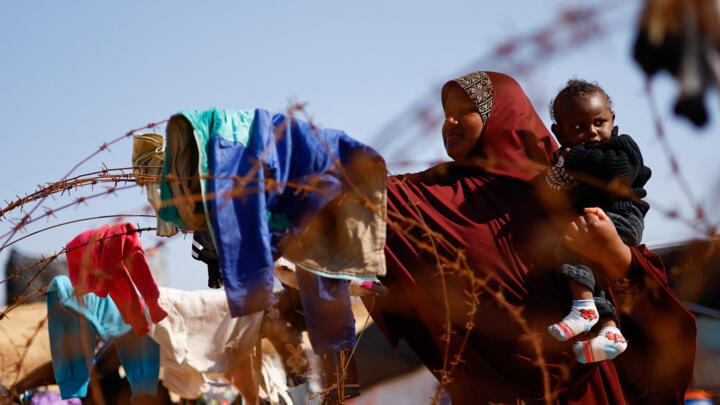
Another challenge is the shortage of menstrual hygiene products. For months, many women have relied on pieces of old fabric instead of sanitary pads, often in crowded spaces with little privacy.
Ali also says the war has led to a sharp rise in gender-based violence, including psychological abuse and sexual harassment.
Women, she explains, need more than emergency aid.
"They need long-term psychosocial support," she says. “They need safe spaces and opportunities to earn income again."
"Recovery requires stability and safety,” Ali says. “It also requires structured psychological support so women do not carry this burden alone."
Programs that provide training or small vocational opportunities can help restore a sense of independence, she adds.
"Recovery requires stability and safety,” Ali says. "It also requires structured psychological support so women do not carry this burden alone."
In Gaza’s tent camps, International Women’s Day passes quietly.
There are no stages or speeches. Instead there is smoke from cooking fires, the weight of water containers and the sound of children crying.
For many women here, March 8 is not a day of celebration.
It is another day of endurance.